Civil 3D USA Pricing 2026: $629/Year Commercial – Save $2,316 vs Autodesk
March 24, 2026
Architecture Firm Software Stack USA 2026: $1,588/Year vs $6,950 – Complete BIM Setup
March 27, 2026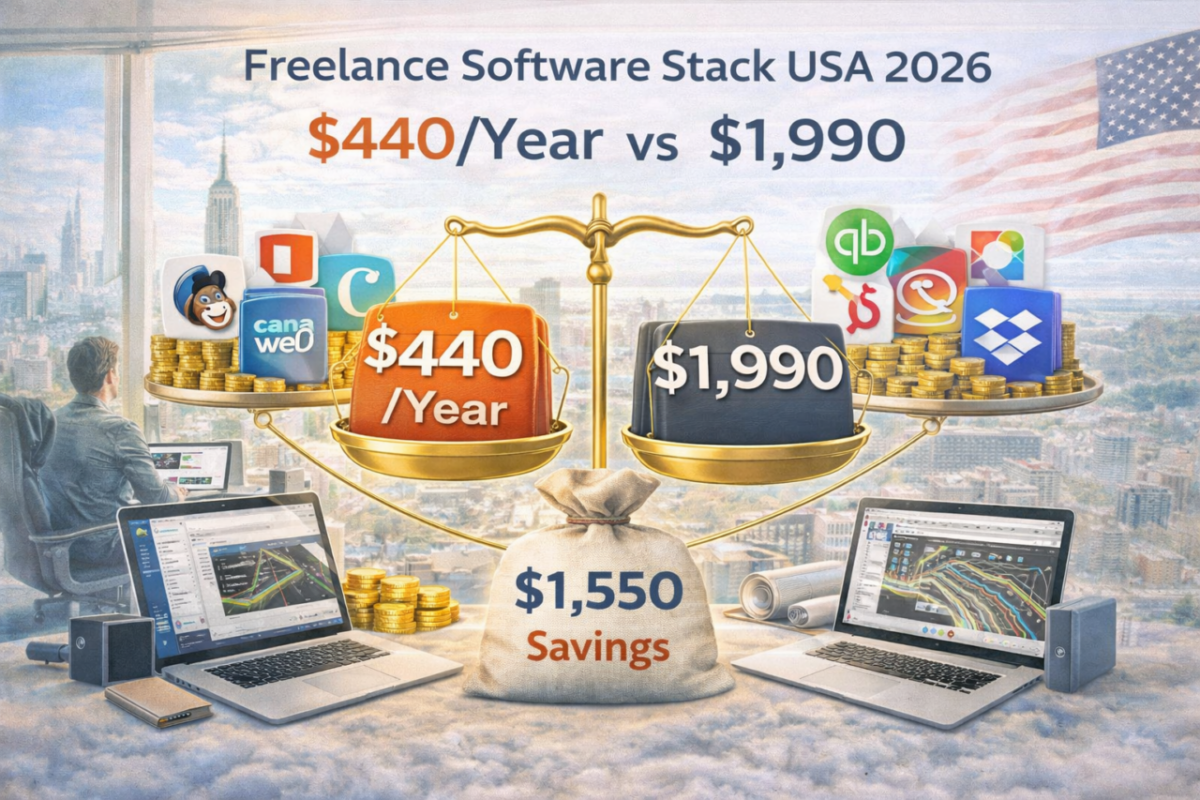
For many marketing agencies in the United States, software costs quietly erode margins every year. Creative tools, Office licenses, and operating systems are treated as unavoidable overhead, yet most teams end up paying far more than necessary.
That matters because agency economics are already tight. Salaries, client acquisition, SaaS platforms, advertising, contractors, and office costs all compete for the same budget. When software vendors add another $2,000 to $3,000 per employee over time, the impact becomes very real.
This is why building the right marketing agency software stack matters in 2026. With a more disciplined licensing strategy, agencies can equip their teams professionally while reducing annual software costs per seat dramatically.
Marketing Agency Software Stack: Cost Overview
Mainstream software stack: about $2,640/year per seat
Optimized software stack: about $700/year per seat
Estimated Savings: about $1,940/year per seat
View Adobe Creative Cloud All Apps →Why Software Costs Matter for Agencies
Agencies sell expertise, execution, creativity, and measurable results. They do not sell software. Yet software remains one of the most persistent fixed costs inside the business, especially when every team member is placed on expensive subscription plans by default.
For a small boutique or mid-size agency, saving a few hundred dollars per employee each year is not a trivial optimization. Across five, ten, or twenty-five seats, it can become the difference between tighter margins and meaningful reinvestment.
In practical terms, a smarter licensing stack can free up budget for talent, media spend, automation, training, or profit retention.
The Four Core Agency Roles
Most marketing agencies can be broken down into four role groups, and each group needs a slightly different software setup. This matters because not everyone in the company needs the same tools or the same pricing model.
Typical agency role groups include:
- Creative team: designers, video editors, content creators
- Account management and strategy
- Media buyers and analysts
- Leadership and operations
Once software is assigned by role rather than by habit, the cost structure becomes far easier to optimize.
Creative Team Software Stack
Creative teams usually drive the highest software costs because they rely on Adobe tools for design, video, presentations, brand assets, and campaign materials. This is where most agencies overpay first.
At mainstream pricing, Adobe Creative Cloud Pro alone can absorb hundreds of dollars per seat each year before Office or operating system costs are added.
Optimized creative team stack:
- Adobe Creative Cloud All Apps – $300/year
- Office 2024 Professional Plus – $45 lifetime
- Windows 11 Pro – $15 lifetime
For most agencies, this setup already covers the core production environment without forcing every creative into Adobe’s highest-priced subscription tier.
Account Management and Strategy Stack
Account managers and strategists usually need a different setup. Their workflow is less dependent on Adobe and more focused on presentations, spreadsheets, proposals, reporting, and internal documentation.
This is why recurring Microsoft 365 subscriptions often become wasteful for these roles, especially when the team already uses Slack, Asana, Monday, ClickUp, Google Drive, or other collaboration systems outside the Microsoft stack.
For many agencies, Office 2024 Professional Plus plus Windows 11 Pro already covers the real work without unnecessary recurring fees.
Media Buyers and Analysts
Media buyers and analysts typically live inside browsers, dashboards, spreadsheets, and reporting tools. Their most important desktop software is usually Excel, PowerPoint, and a stable Windows environment, not a full cloud subscription bundle.
For this group, the software stack can often be kept extremely lean without reducing productivity at all.
That makes them one of the easiest roles to optimize from a cost perspective.
Leadership and Operations
Leadership and operations teams often need Office, Windows, and sometimes tools like Visio or Project for planning, presentations, diagrams, or internal process mapping.
Even here, the same logic applies: use lifetime desktop tools where the workflow is stable, and reserve subscriptions only for roles that genuinely need cloud-first collaboration or advanced ecosystem features.
This is where a lot of hidden overspending can be eliminated without any real downside.
Adobe Creative Cloud: The Biggest Cost Lever
Adobe is usually the biggest single software expense inside a marketing agency. Designers, editors, and content teams often get placed on the most expensive plan by default, even when they mainly work with desktop applications and do not need premium AI-heavy or mobile-centric features.
For most agencies, Adobe Creative Cloud All Apps at $300 per year is already enough for the majority of production work. Teams that actually need high AI usage can step up to the Pro + AI option at $400 per year.
Adobe Pro mainstream cost: about $840/year per creative
Creative Cloud All Apps: $300/year
Estimated savings per creative seat: about $540/year
Across a five-person creative team, that difference alone can free up thousands of dollars annually.
Why Most Agencies Do Not Need Microsoft 365 for Everyone
Microsoft 365 is useful, but many agencies pay for it out of habit rather than necessity. Teams often use Google Drive, Slack, Notion, ClickUp, Asana, Dropbox, or other cloud services instead of fully relying on OneDrive, SharePoint, or Teams.
When that happens, Office 2024 Professional Plus becomes a more rational choice. It gives agencies the classic Office desktop tools they actually use, without forcing them into a recurring per-user subscription.
For many seats, this is one of the easiest long-term savings opportunities in the entire stack.
Windows 11 Pro: Still a Business Requirement
Agencies often underestimate the value of Windows 11 Pro. For client-facing work, business-grade security, remote access, and a more professional workstation environment still matter, especially when teams handle sensitive campaign data or work in hybrid setups.
However, paying retail pricing every time is unnecessary. When Windows 11 Pro is treated as a lifetime infrastructure purchase rather than a recurring problem, the economics improve immediately.
This is not the largest line item in the stack, but across multiple seats it still adds up quickly.
Real Agency Savings by Team Size
The bigger the team, the more visible the gains become. A boutique agency with five people can save several thousand dollars per year. A ten-person shop can easily recover enough budget to fund software automation, paid traffic, or internal hiring support.
5-person agency: about $9,700/year saved
10-person agency: about $19,400/year saved
25-person agency: about $48,500/year saved
At that level, software optimization is no longer a minor back-office detail. It becomes part of agency profitability strategy.
What a Smarter Stack Looks Like in Practice
A practical agency stack does not mean choosing the cheapest tool in every category. It means aligning the right tool with the right role and avoiding recurring costs where they do not create meaningful value.
For example, creative teams may need Adobe All Apps or Adobe Pro + AI, while account teams may only need Office 2024 and Windows 11 Pro. Leadership may add Visio or Project, but not every employee needs those tools.
That role-based approach is how software costs stay efficient without making the agency feel under-equipped.
Why This Matters More in 2026
Agencies in 2026 face margin pressure from every direction: client expectations, AI disruption, competition, automation costs, and performance accountability. In that context, unnecessary software subscriptions become even harder to justify.
The agencies that manage software intelligently protect margin without reducing quality. That is a strategic advantage, especially in competitive local and mid-market environments.
In other words, smarter software buying is not about being cheap. It is about refusing to let vendors take margin that could stay inside the business.
Build a smarter agency software stack
If your agency wants to reduce overhead without lowering output quality, the right mix of Adobe, Office, Windows, and management tools can dramatically improve per-seat economics.