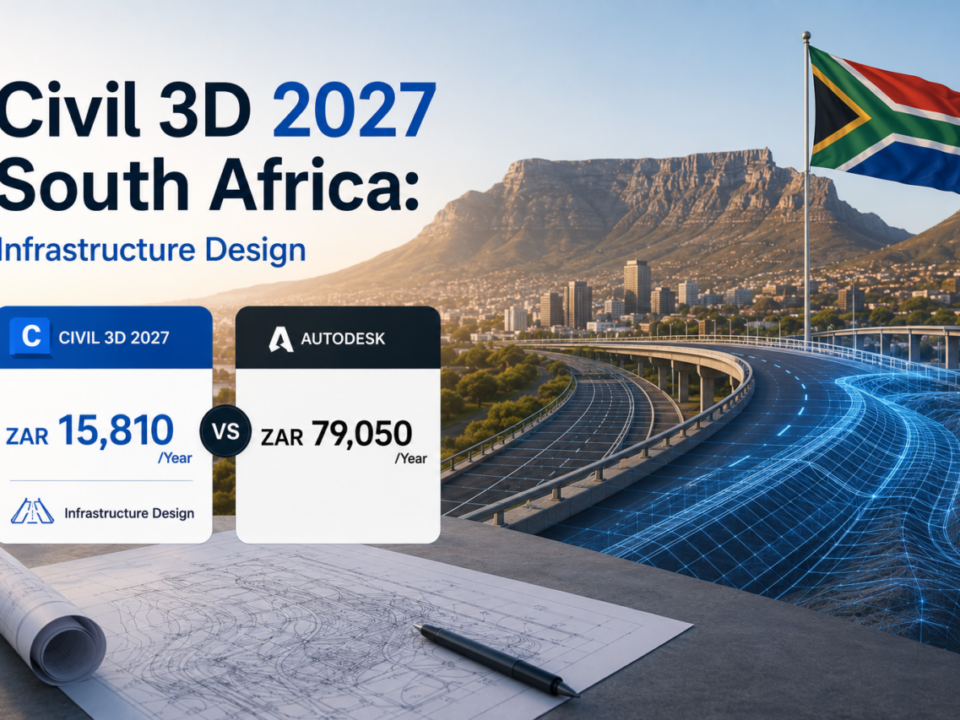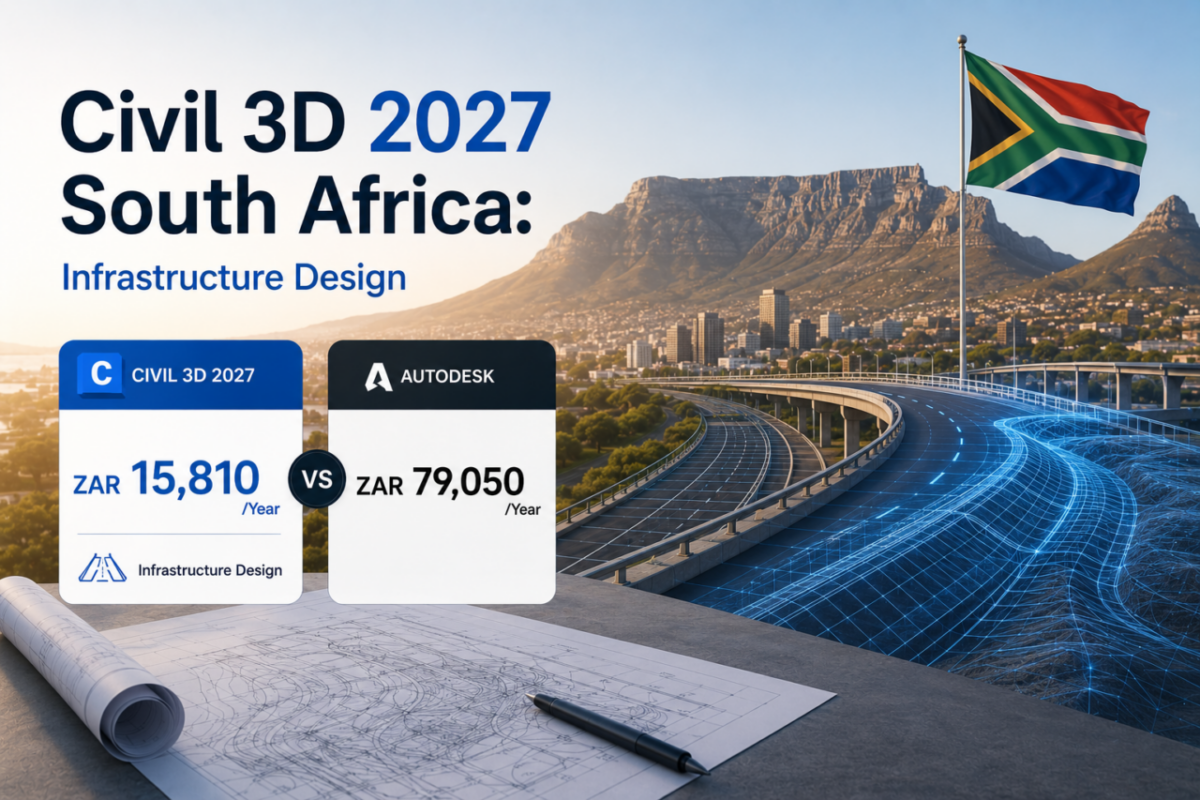
Civil 3D 2027 South Africa: Infrastructure Design at ZAR 15,810/Year vs ZAR 79,050 Autodesk
May 25, 2026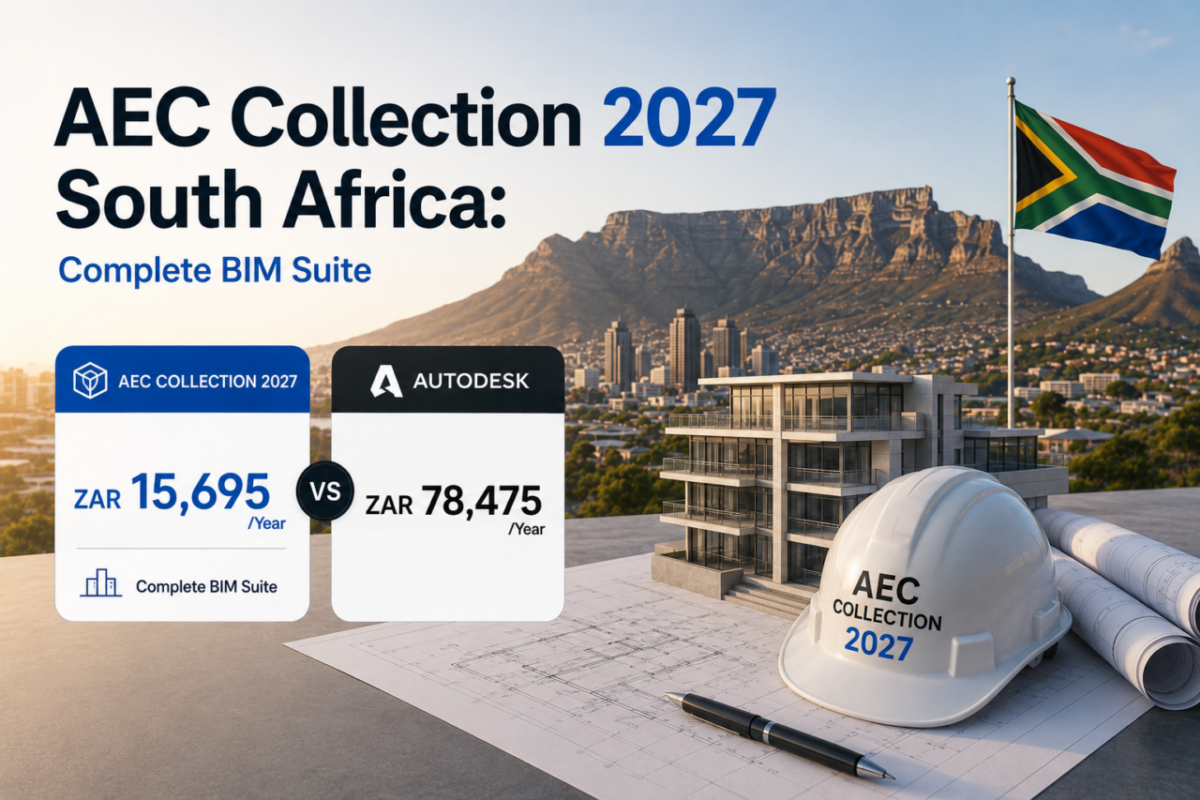
Autodesk launched the AEC Collection 2027 in March 2026, bundling Revit, AutoCAD, Civil 3D, and 10 additional applications into a comprehensive architecture-engineering-construction software package. The collection delivers AI-powered BIM modeling, infrastructure design, clash detection, and project coordination capabilities that previously required separate subscriptions totaling ZAR 180,000-240,000 annually for South African multidisciplinary practices.
However, official Autodesk pricing creates prohibitive barriers for small-to-medium Johannesburg and Cape Town firms. Specifically, at ZAR 78,475 per user annually, a 5-person multidisciplinary practice faces ZAR 392,375 yearly software expenses before adding rendering tools, collaboration platforms, or specialty survey applications.
Commercial licensing solves this affordability challenge. Furthermore, it delivers the complete AEC Collection 2027—identical software, same AI features, same SANRAL and GBCSA compliance—at ZAR 15,695/year versus official pricing. This represents an 80% cost reduction that transforms complete BIM capability from budget constraint into competitive advantage for South African firms competing across architectural, civil engineering, and structural design disciplines.
AEC Collection 2027 commercial licensing South Africa 2026
What South African architecture and engineering firms actually pay for AEC Collection 2027:
Official Autodesk pricing:
Single user → ZAR 78,475/year
5-person firm → ZAR 392,375/year
Commercial licensing:
Single user → ZAR 15,695/year
5-person firm → ZAR 78,475/year
Annual savings per user: ZAR 62,780. Additionally, a 5-person multidisciplinary team saves ZAR 313,900/year—equivalent to three junior staff salaries or complete office technology infrastructure budget.
Get AEC Collection 2027 License →Why AEC Collection 2027 delivers complete South African project capability
The AEC Collection eliminates software fragmentation that plagues multidisciplinary practices across Gauteng, Western Cape, and KwaZulu-Natal provinces. For instance, architecture firms need Revit for GBCSA Green Star submissions but also require AutoCAD for municipal building plan approvals and schematic design iterations. Meanwhile, engineering consultancies use Civil 3D for SANRAL road projects yet still need coordination tools for contractor collaboration on mining infrastructure and commercial developments.
Complete software toolkit included AEC Collection 2027:
Core design applications for South African compliance. Revit 2027 (BIM modeling with AI Assistant), AutoCAD 2027 (2D drafting with Geometry Cleanup), and Civil 3D 2027 (infrastructure design) form the foundation. Moreover, these three applications alone cost ZAR 126,910 annually when purchased separately through official channels—yet they represent only 23% of the AEC Collection’s total software value proposition for multidisciplinary project delivery.
Collaboration and municipal coordination tools. In addition, Navisworks Manage handles clash detection across architectural, structural, and MEP disciplines required for Sandton tower developments and Waterfall commercial projects. BIM Collaborate Pro, meanwhile, provides cloud worksharing for distributed teams working on Cape Town V&A Waterfront expansions or Durban Point mixed-use schemes. Consequently, project coordination that previously required third-party platforms now occurs entirely within Autodesk’s integrated ecosystem compatible with South African building regulations.
Specialized vertical applications for South African projects. InfraWorks handles conceptual infrastructure design for provincial road departments and metropolitan municipalities, Advance Steel addresses structural steel detailing for mining headframes and industrial facilities, and FormIt Pro enables rapid conceptual modeling during client presentations. As a result, firms expand service capabilities across architecture, civil engineering, and structural disciplines without expanding software licensing budgets or procurement complexity.
All 13 applications included AEC Collection 2027:
✔ Revit 2027 (BIM + AI Assistant + GBCSA)
✔ AutoCAD 2027 (2D drafting + Geometry Cleanup)
✔ Civil 3D 2027 (infrastructure + SANRAL)
✔ Navisworks Manage (clash detection)
✔ BIM Collaborate Pro (cloud worksharing)
✔ InfraWorks (conceptual infrastructure)
✔ Advance Steel (structural detailing)
✔ FormIt Pro (conceptual modeling)
✔ Plus 5 additional specialty tools
Real-world cost comparison versus individual South African licenses
Consider what purchasing core AEC applications separately costs South African firms under official Autodesk regional pricing structures. Notably, the individual totals add up far faster than most practices expect:
Individual application pricing (official ZAR):
Revit 2027 → ZAR 58,100/year
AutoCAD 2027 → ZAR 38,000/year
Civil 3D 2027 → ZAR 79,050/year
Total for 3 applications → ZAR 175,150/year
AEC Collection 2027 official → ZAR 78,475/year (saves ZAR 96,675)
AEC Collection 2027 commercial → ZAR 15,695/year (saves ZAR 159,455)
The economics favor AEC Collection subscriptions overwhelmingly. Therefore, even South African firms using only Revit and AutoCAD benefit financially from Collection licensing rather than purchasing applications individually—before considering the 10 additional included tools and comprehensive SANRAL, GBCSA, and municipal compliance maintenance across all 13 applications.
Commercial licensing versus official Autodesk pricing
Commercial licenses deliver the complete AEC Collection 2027—identical applications, same AI features, same SANRAL and GBCSA compliance. Nevertheless, procurement channels differ significantly, creating substantial pricing advantages for South African AEC firms competing across multidisciplinary project sectors.
Official Autodesk channels target enterprise clients with standardized regional pricing. On the other hand, commercial licensing serves small-to-medium practices through specialized distribution networks optimized for professional services firms navigating competitive South African tender environments.
Both licensing types include annual software updates, full technical support, and cloud collaboration credits. Furthermore, both maintain compatibility with Devotech SA Country Kit extensions, SABS standards, and municipal building plan submission requirements across all 13 applications for comprehensive project delivery.
Commercial licensing benefits:
✔ 80% cost reduction versus official pricing
✔ Complete 13-application BIM software suite
✔ All AI features, SANRAL and GBCSA compliance
✔ Annual updates across entire collection
Real project economics for South African AEC firm
Consider a 5-person multidisciplinary practice in Sandton delivering architecture, civil engineering, and structural coordination services. In practice, their workflow requires Revit for building design and Green Star submissions, Civil 3D for site development and stormwater management, AutoCAD for general drafting and municipal approvals, and Navisworks for contractor coordination on mining and commercial projects.
Software cost comparison (5 users):
Purchasing individually (official ZAR):
Revit 2027 → ZAR 290,500/year
Civil 3D 2027 → ZAR 395,250/year
AutoCAD 2027 → ZAR 190,000/year
Total → ZAR 875,750/year
AEC Collection official:
Total → ZAR 392,375/year (saves ZAR 483,375)
AEC Collection commercial:
Total → ZAR 78,475/year
Savings vs individual licenses → ZAR 797,275 (91% reduction)
These savings fundamentally transform practice economics. As a result, South African firms reinvest in advanced BIM training, pursue SACAP professional registration, or expand Green Star accreditation capabilities—strategic investments previously constrained by software budget limitations across multidisciplinary service offerings.
Why AEC Collection works for South African multidisciplinary practices
Small architecture-engineering firms compete against large multinational AEC corporations for the same Sandton developments, V&A Waterfront projects, and government institutional work across Gauteng, Western Cape, and KwaZulu-Natal provinces. Consequently, software capability cannot differentiate competitive positions when everyone deploys identical Autodesk tools regardless of firm size or provincial presence.
Commercial licensing eliminates the software cost disadvantage entirely. Moreover, it allows smaller practices to deploy complete BIM capability at sustainable pricing levels. Ultimately, this democratization of AEC technology benefits South Africa’s competitive tendering environment while maintaining SANRAL geometric standards, GBCSA Green Star requirements, and municipal compliance across all practice sizes.
Reinvesting the savings into growth
Beyond the headline discount, multidisciplinary firms gain real strategic flexibility—they can invest savings in specialized staff, pursue Professional Engineer and Professional Architect registrations, or expand service offerings into heritage conservation or sustainable design consulting. In contrast, overpaying for software subscriptions constrains growth opportunities without improving tender competitiveness or municipal submission compliance for commercial and infrastructure projects.
Build complete multidisciplinary AEC capability South Africa
AEC Collection 2027 commercial licensing: ZAR 15,695/year per user. All 13 applications, AI features, SANRAL and GBCSA compliance, and cloud collaboration included at 80% savings versus official pricing.
Or individual 2027 applications South Africa: